Dracula: Love Bleeds Eternal in Luc Besson’s Gothic Spectacle
- Category: Horror, Suspense, Gothic Romance, Fantasy
- Release Date: February 6, 2026 (Limited Theatrical)
- Cast: Caleb Landry Jones, Christoph Waltz, Zoë Bleu, Matilda De Angelis, Guillaume de Tonquédec
- Language: English
- Duration: 2h 9m
- Director: Luc Besson
- Screenwriter: Luc Besson
- Producer: Luc Besson
- Studio: EuropaCorp / Vertical
The legend of Dracula has been told a thousand times, from the silent shadows of Nosferatu to the romantic excess of Coppola. Yet, cinema always finds a way to resurrect the Count. On February 6, 2026, the legendary French filmmaker Luc Besson (The Fifth Element, Léon: The Professional) unleashes his vision of the immortal warlord. Simply titled Dracula, this film marks a significant cinematic event, reuniting Besson with his DogMan star, the chameleon-like Caleb Landry Jones, and pitting him against the screen presence of Academy Award winner Christoph Waltz.
This is not a modern reimagining set in a high school or a superhero-style action flick. This is Besson returning to the roots of Bram Stoker’s novel but filtering it through his distinct, hyper-stylized lens. It is a film about the madness of love, the weight of eternity, and the violence of faith. For the audience on fmovies.tr who appreciate visually arresting cinema that prioritizes atmosphere and emotion over cheap jump scares, this retelling promises to be one of the most provocative horror releases of early 2026.
The Plot: A Crusade Against Heaven
The narrative begins in the 15th century, a time of dirt, blood, and iron. We are introduced to Prince Vladimir (Caleb Landry Jones), a warrior who fights with a savagery that terrifies both friend and foe. His tether to humanity is his wife (Zoë Bleu), a beacon of light in his dark world. However, tragedy strikes with brutal swiftness. When Vladimir returns from battle to find his wife murdered—a casualty of his enemies’ cruelty—his grief transforms into a cosmic rage.
In a moment of sacrilegious fury, Vladimir renounces God. He damns the heavens for taking the only thing he ever loved. This act of spiritual rebellion curses him. He is denied the peace of death and is instead reborn as Dracula, a creature of the night fueled by blood and an undying memory.
The Hunter and the Hunted
The film then spans centuries, showing Dracula not merely as a monster, but as a tragic figure moving through history like a ghost. He is an immortal warlord who defies fate, searching for the reincarnation of his lost love. The narrative hook tightens when he believes he has finally found her in the modern era (or a stylized 19th century, depending on the timeline shifts characteristic of Besson).
However, every monster must have a hunter. Enter the relentless Priest (Christoph Waltz). This character is more than just a Van Helsing archetype; he is a man of dogmatic faith sworn to end Dracula’s reign. The Priest views Dracula not as a tragic lover, but as an abomination that mocks God’s order. As Dracula moves closer to reuniting with his love, the Priest closes in, setting the stage for a confrontation that is as philosophical as it is physical.
Director’s Vision: Luc Besson’s Return to Grandeur
Luc Besson has had a turbulent career, but no one can deny his visual mastery. With *Dracula*, he seems to be channeling the gothic energy of the 1990s while utilizing modern technology.
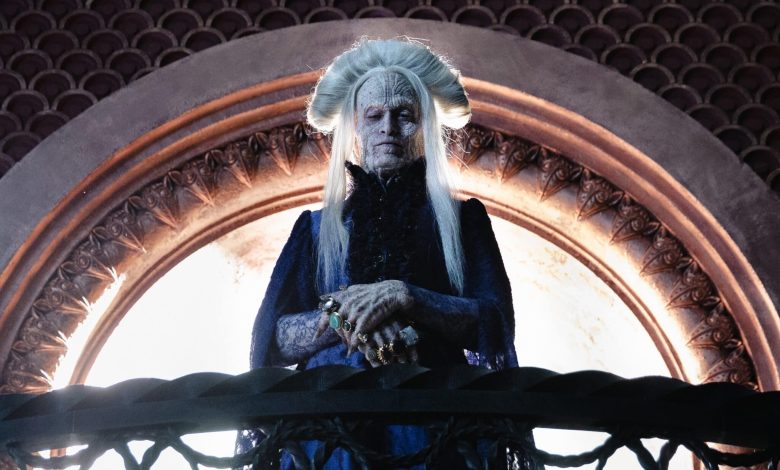
Visual Aesthetic: The film is undeniably a EuropaCorp production. The costumes are lavish, the sets are intricate, and the cinematography plays with deep shadows and vibrant reds. Besson has always been a director who paints with the camera. In *Dracula*, he emphasizes the “romance” in Gothic Romance. The blood is bright and visceral, contrasting with the pale, sickly skin of the vampire. It is a film that looks expensive and feels operatic.
Pacing and Tone: Unlike the frenetic energy of *The Fifth Element*, this film seems to adopt a more deliberate, suspenseful pace. It allows the actors room to breathe and emote. Besson focuses heavily on the tragedy of the character, asking the audience to sympathize with a monster who kills to survive.
The Cast: A Symphony of Eccentricity
The casting of *Dracula* is perhaps its strongest asset. It avoids the traditional “Hollywood hunk” vampire route, opting instead for intense character actors.
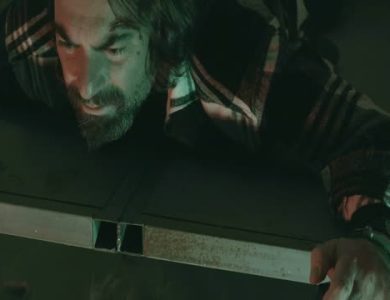
- Caleb Landry Jones as Dracula: Jones is one of the most interesting actors working today. Known for playing disturbed, fragile, or intense characters (*Get Out*, *Nitram*), he brings a unique physicality to the Count. His Dracula is not the suave gentleman of Lugosi; he is a wounded animal. Jones conveys the agony of eternal life—the boredom, the hunger, and the desperation. It is a performance that is likely terrifying and heartbreaking in equal measure.
- Christoph Waltz as The Priest: Who better to play a calm, calculated, and relentless antagonist than Waltz? He brings an intellectual menace to the role. His Priest is not a screaming fanatic, but a man who kills vampires with the efficiency of a surgeon. The verbal sparring matches between him and Jones are the highlight of the script.
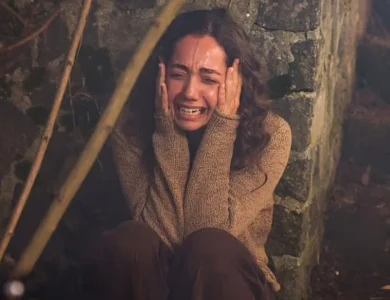
- Zoë Bleu and Matilda De Angelis: The female leads provide the emotional stakes. Bleu, playing the dual role of the lost wife and her reincarnation, has the difficult task of being the object of obsession. De Angelis adds to the European flavor of the cast, grounding the supernatural elements in human emotion.
Critical Analysis: A Blood-Soaked Love Story
Besson’s *Dracula* is best described as a fever dream. It is not a horror movie in the sense of jump scares and gore alone; it is a horror movie about obsession.
The “Love Tale” Angle
The marketing has referred to this as a “Love Tale,” and the film leans heavily into this. It posits that love is the most destructive force in the universe. Dracula destroys his soul for love; he kills thousands for love. The film asks: Is this romantic, or is it monstrous? Besson walks a fine line here, risking melodrama, but the intensity of Caleb Landry Jones anchors the emotions in reality.
Style Over Substance?
Critics of Besson often argue that he prioritizes visuals over narrative depth. In *Dracula*, the visual storytelling is the narrative. The way the castle twists and turns, the way the shadows seem to move on their own—these elements tell us about Dracula’s mind. However, traditional horror fans might find the film too “arthouse” or too focused on the romance rather than the carnage.
The Religious Subtext
By pitting a man who renounced God against a man who serves God (Waltz), the film explores themes of faith. Dracula represents chaos and emotion, while the Priest represents order and suppression. This duality makes the conflict feel epic, raising the stakes beyond just “stake the vampire.”
Dracula (2026) is a bold, bizarre, and beautiful film. It is not for everyone. It is for those who like their horror soaked in wine and tears.
Caleb Landry Jones delivers a transformative performance that redefines the vampire for a new generation, while Christoph Waltz reminds us why he is a cinematic treasure. Luc Besson has created a dark fairy tale that is visually spectacular. If you are willing to surrender to its operatic tone, it is a mesmerizing experience. It is a reminder that true love never dies… it just gets really, really hungry.